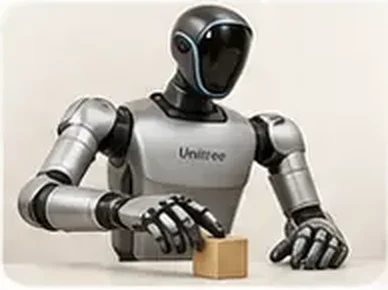
Real robot demonstrations
Scarce, high-value physical data.
Fourier GR1 · Unitree G1 harvest
NVIDIA / TRAINING
GR00T N1.7 learns from human video, real robot demonstrations and simulation.
Published training-data snapshot
Code · Apache 2.0
Weights · NVIDIA Open Model License
THE DATA PYRAMID
Scarce, high-value physical data.
Fourier GR1 · Unitree G1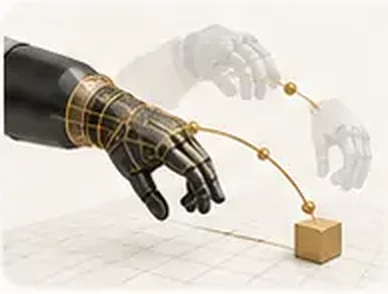
Isaac · Cosmos · MimicGen
GR00T-Mimic · GR00T-Dreams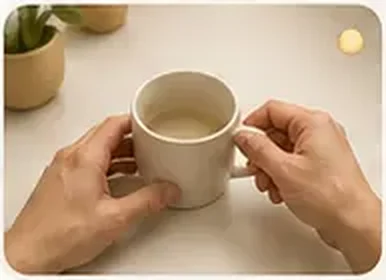
Object semantics and human egocentric experience.
Pick-and-place: a foundation for tabletop and industrial manipulation.
Identify the object and establish a stable hold.
Guide the object to its target and release.
G1 reference task: move an apple onto a plate with whole-body control.
Example tasks: Apple → plate / basket · Bottle → cabinet · Can or cup → drawer · Fruit → basket
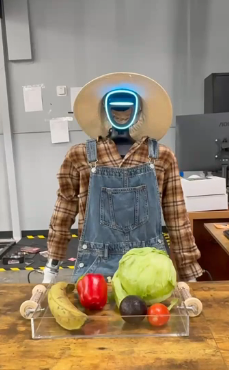
NVIDIA’s humanoid pick-and-place task is simple on purpose: a Unitree G1 stands at a table, sees an object such as an apple, picks it up, and sets it on a plate or in a basket. In the open GR00T dataset the robot also follows a short language command and chooses among a few fruits. A harder variant adds walking, go to the object, grasp it, then carry it to the target.
It matters because this is the basic unit of useful robot work. The same short sequence tests vision, grasping, arm control, and balance. NVIDIA uses it as the starter loop for Isaac GR00T: collect a few demonstrations, fine-tune a policy, score it in simulation, then run it on the real G1. If a humanoid cannot reliably pick and place, it is not ready for kitchens, warehouses, or homes.
The pyramid describes complementary data sources, not measured volumes. Task examples illustrate a broader pick-and-place family. Artwork is conceptual.